Performance prediction that helps teams anticipate outcomes using real market and execution signals
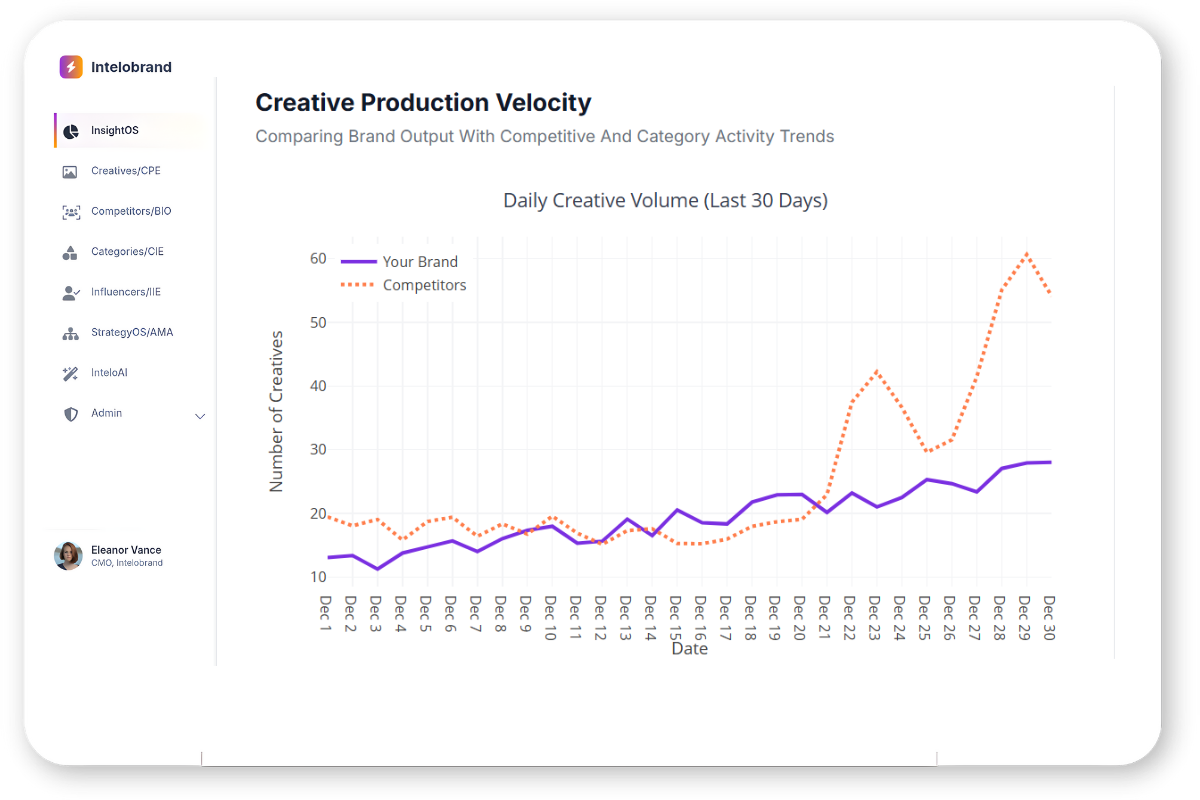
Performance Prediction analyzes historical creatives, narratives, offers, competitors, and category behavior—combining them with performance data to estimate which strategies are likely to perform, underperform, or decline before teams commit significant spend.
Marketing performance becomes hard to predict when decisions rely on instinct or isolated metrics
Teams often depend on past campaign results, surface platform metrics, or intuition—without connecting how creative patterns, narratives, offers, and category conditions influence future performance, creating uncertainty and reactive decision-making cycles.
Unreliable Past Results
Past campaign outcomes frequently fail to repeat, especially as market conditions, audience behavior, and competitive dynamics continue changing.
Platform Metrics Alone
Platform metrics lack broader market context, preventing teams from understanding why performance changes and what signals actually matter.
Hidden Creative Fatigue
Creative fatigue often develops unnoticed, reducing engagement and performance long before teams recognize the need for creative refresh.
Ignored Category Signals
Category conditions are frequently overlooked, causing teams to misjudge demand shifts and broader market influences on performance.
Clear boundaries on what performance prediction can realistically support in modern marketing decision making today
Performance Prediction does not forecast exact ROI or media outcomes—instead, it estimates likelihood using market patterns, historical performance signals, saturation indicators, and execution similarities observed across brands and categories.
Likelihood of Effectiveness
Predicts how strongly a strategy may perform.
Risk of Creative Fatigue
Identifies when creative impact is declining.
Declining Pattern Warnings
Highlights patterns associated with falling performance.
Relative Strategy Confidence
Compares strategic options by predicted success likelihood.
Predictions are generated by comparing execution patterns against extensive historical market outcomes
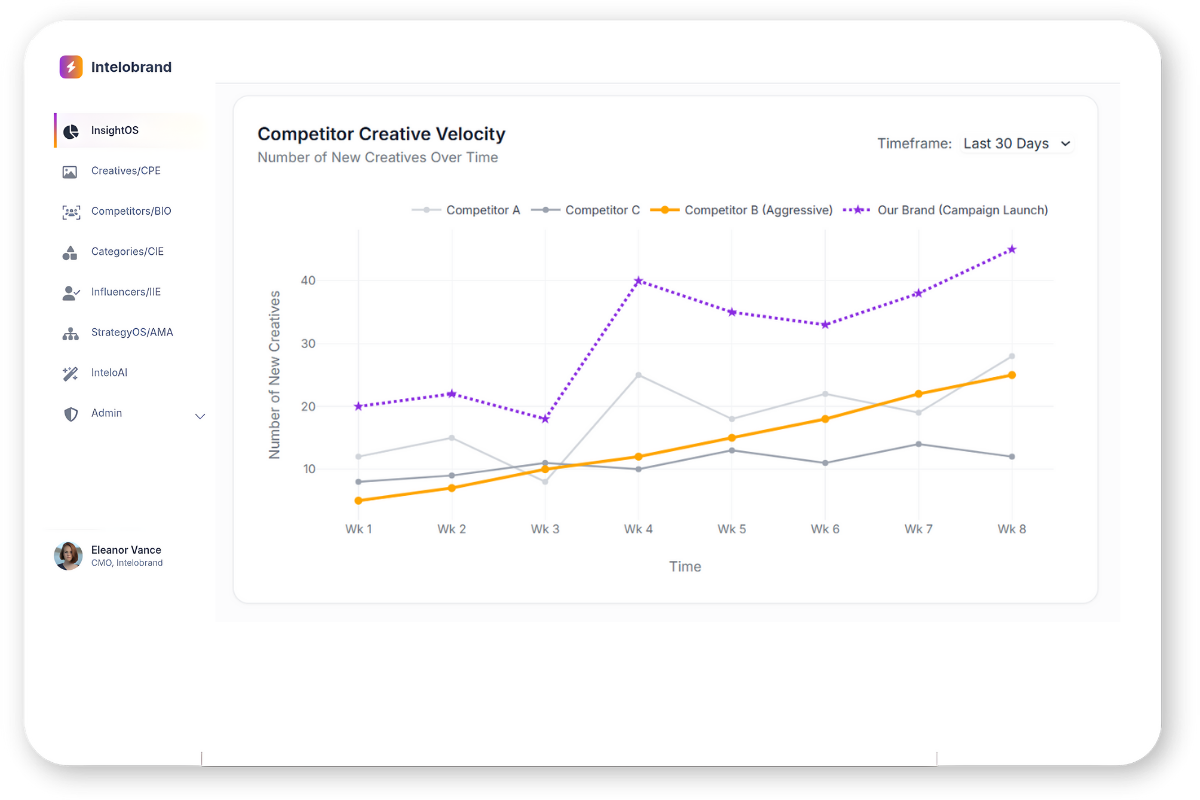
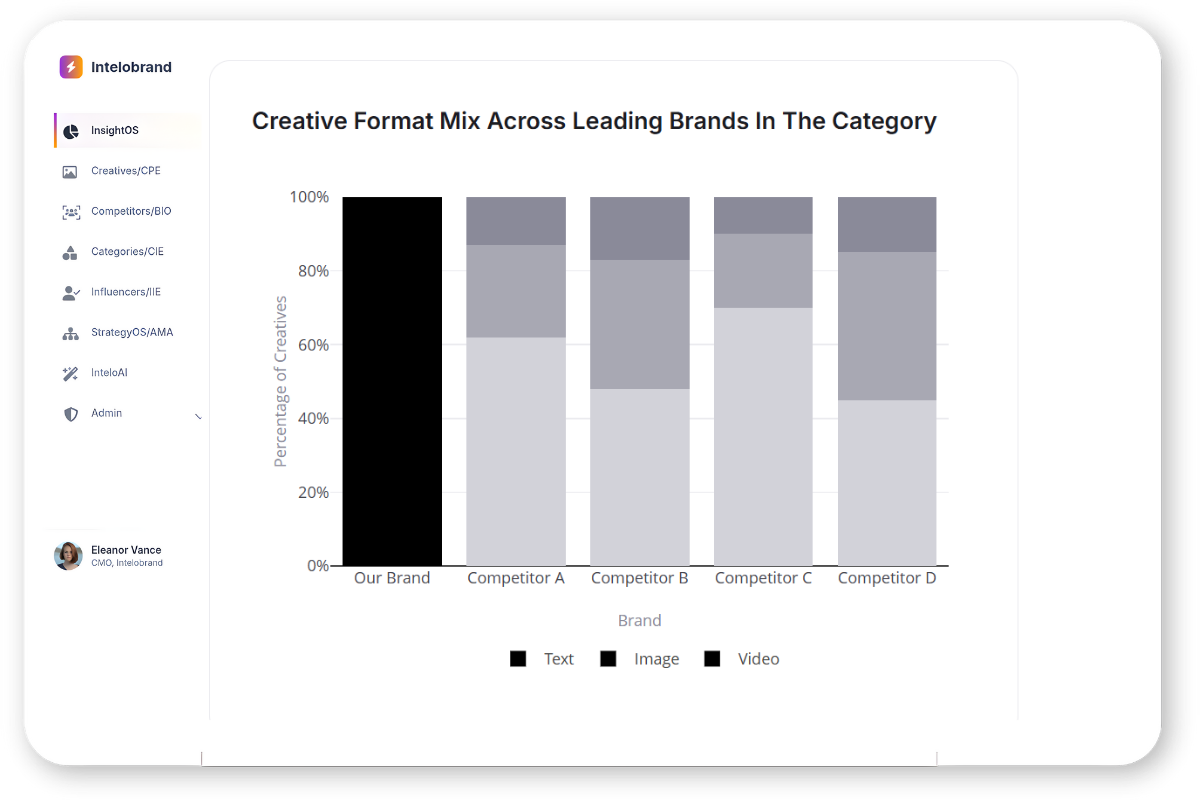
Intelobrand compares current strategies against thousands of historical creatives, narratives, offers, and competitor moves—tracking how similar patterns performed over time to estimate whether a strategy will sustain, decline, or struggle.
Creative Similarity Matching
Current creatives are compared with similar historical executions to predict likely future performance trajectories.
Narrative Pattern Repetition
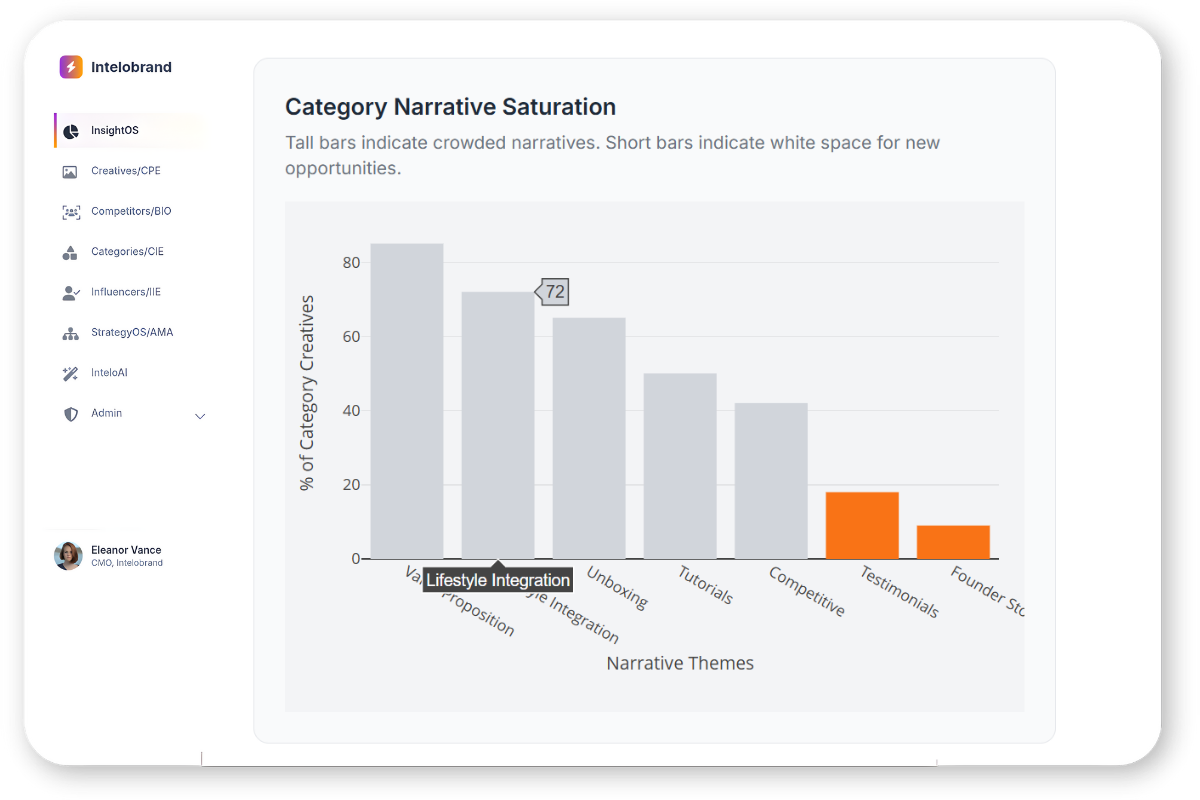
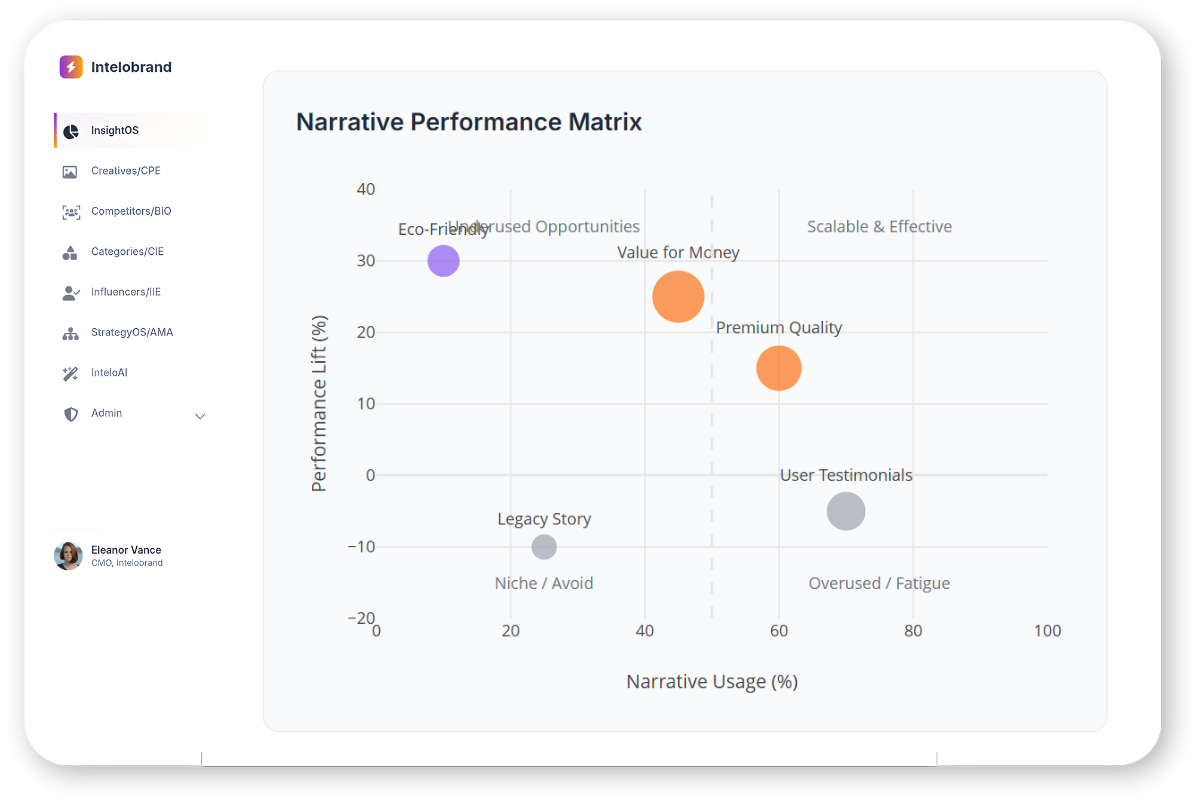
Recurring claims and story structures are evaluated against historical results to forecast message effectiveness and longevity.
Offer and Pricing Recurrence
Repeated pricing and promotional behaviors are measured against historical outcomes to assess future response and sustainability.
Category Saturation Signals
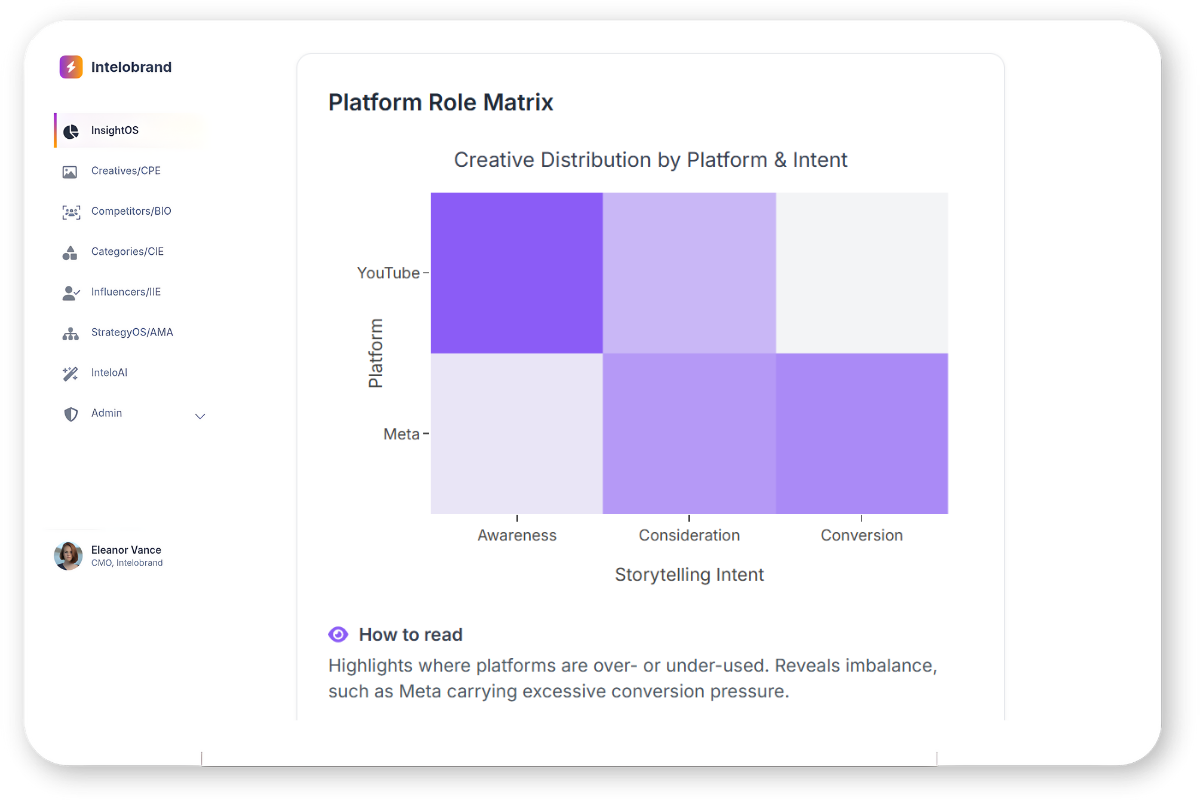
Category saturation levels are analyzed to estimate when market conditions may limit growth or accelerate performance decline.
Predictions are weighted using real performance data, not simply market visibility or surface-level activity
Performance Prediction combines pattern similarity with historical performance data—helping teams understand whether strategies that appear similar today previously delivered strong, moderate, or declining results in comparable market environments.
Performance-Weighted Predictions
Uses historical outcomes to improve prediction accuracy.
Avoid Failed Patterns
Prevents repeating strategies that previously underperformed.
Confidence Scoring by Similarity
Assigns confidence using similarity to past results.
Evidence-Backed Planning Signals
Guides planning with proven performance evidence.
Use performance prediction to plan smarter tests, scaling, and strategic business decisions
Teams use Performance Prediction to prioritize testing ideas, decide what to scale or stop, reduce experimentation risk, and align stakeholders—ensuring decisions are grounded in market evidence rather than optimism or reactive pressure.
Prioritize What To Test
Teams identify the most promising ideas to validate first, reducing wasted experiments and improving overall learning efficiency.
Scale With Confidence
Successful patterns are expanded confidently, backed by predictive signals indicating higher likelihood of sustained performance.
Avoid Risky Repetition
Low-performing patterns are prevented from repeating, reducing unnecessary spend and avoiding predictable performance declines.
Align Teams On Decisions
Stakeholders operate from the same predictive insights, improving alignment, speed, and confidence in execution decisions.