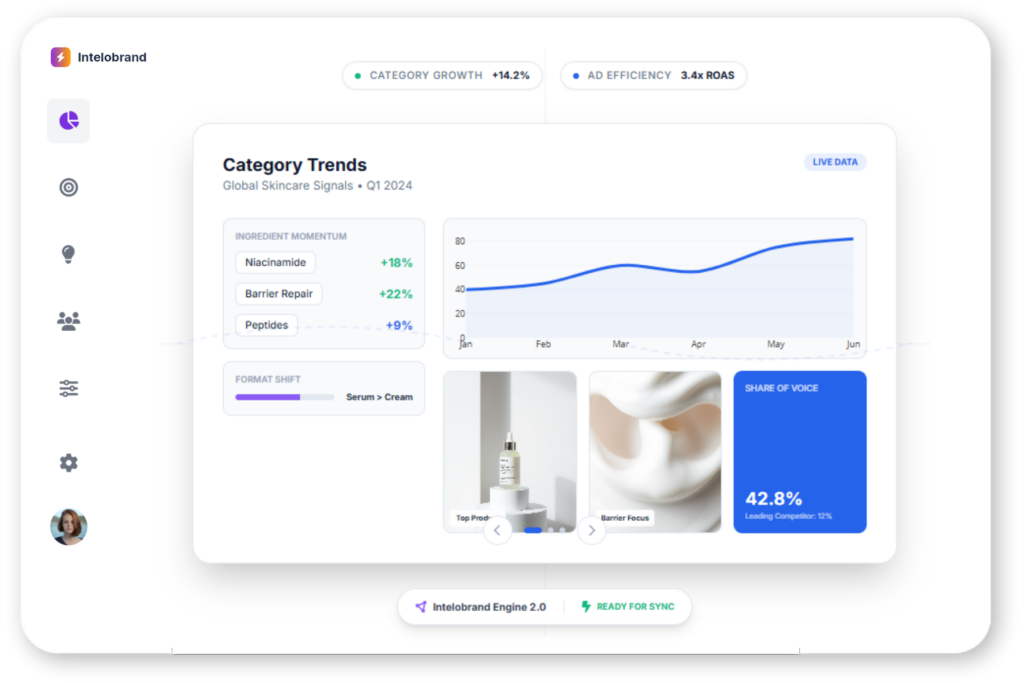
Category intelligence that reveals how markets evolve, saturate, and shift across brands and platforms
Category Intelligence analyzes ads, influencer content, offers, and messaging across brands to surface dominant themes, saturation signals, and emerging patterns—helping teams ground strategic decisions in how the category is actually behaving in real time.
Category decisions fail when assumptions replace live, continuous observation of real market behavior
Teams frequently make category decisions using outdated research, limited brand examples, and internal beliefs—missing how quickly narratives, formats, and offers evolve across the market, resulting in delayed or misaligned strategic actions.
Assumed Category Trends
Category trends are often assumed without continuous validation from live market intelligence, creating blind spots that distort strategic planning decisions.
Late Saturation Detection
Saturation frequently becomes visible only after growth slows, causing teams to miss critical windows for timely category repositioning.
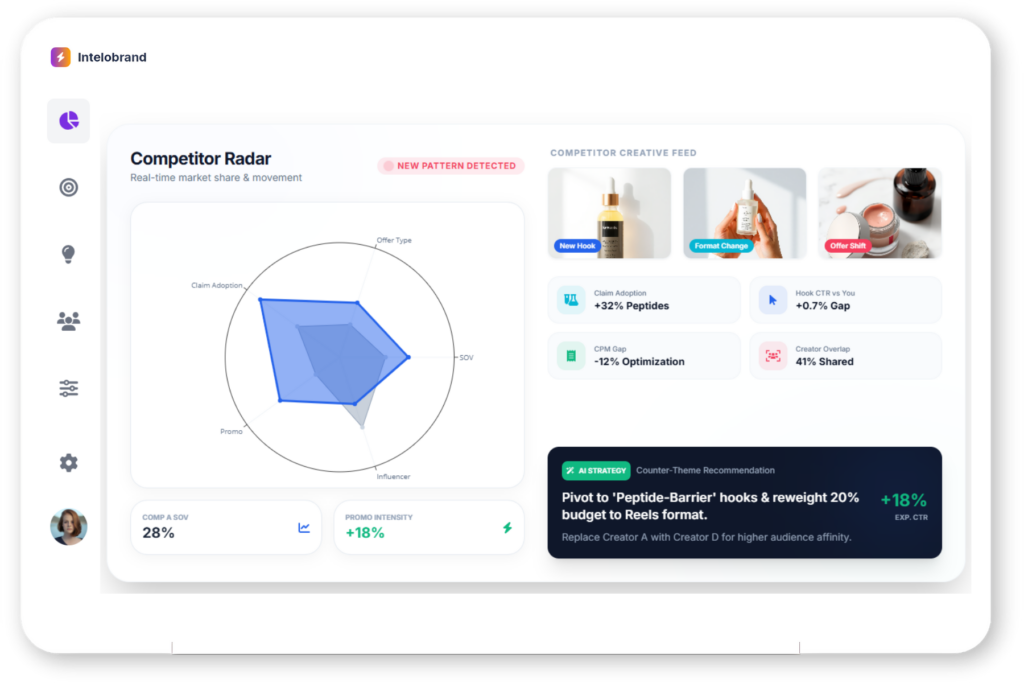
Selective Competitor Monitoring
Competitor activity is observed inconsistently across markets, limiting accurate understanding of competitive pressure and shifting category direction.
Post-Peak Opportunities
Opportunities are often identified only after demand momentum peaks, reducing the potential impact of new strategic initiatives.
See recurring category patterns across messaging, creatives, formats, offers, and pricing signals
Category Intelligence aggregates live executions across brands to reveal recurring patterns—showing what the category communicates, which creative formats dominate, how offers are structured, and what pricing signals have become standard practice.
Common Category Narratives
Dominant stories repeated consistently across category campaigns.
Repeated Creative Formats
Frequently used creative formats shaping category communication norms.
Typical Offer Structures
Common promotional structures influencing buyer expectations across category.
Understand when category ideas become overused and begin losing relevance and effectiveness over time
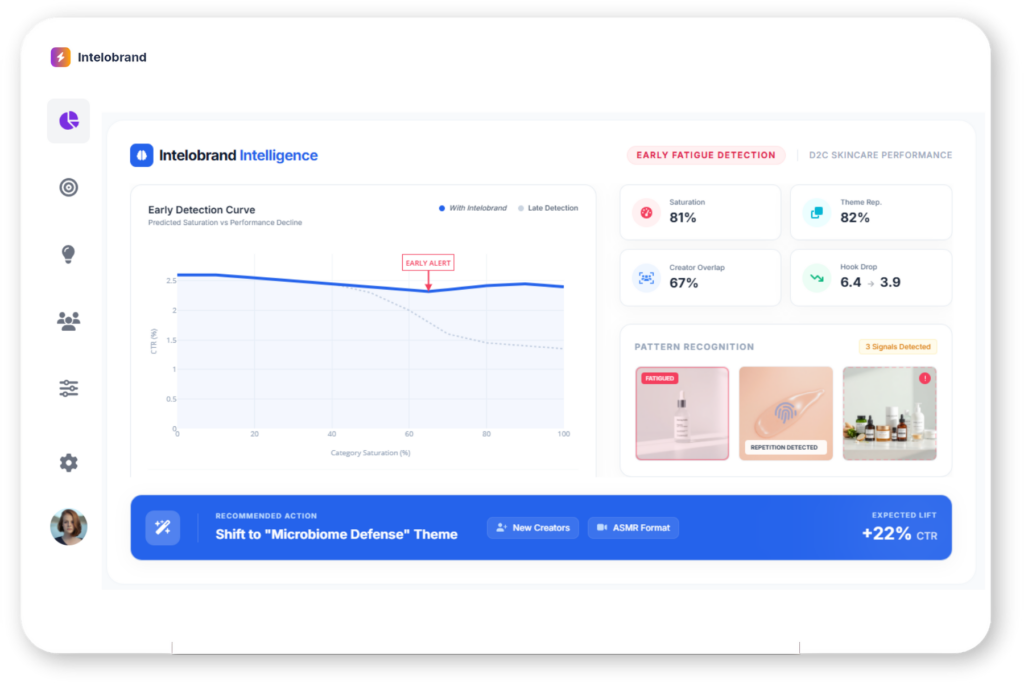
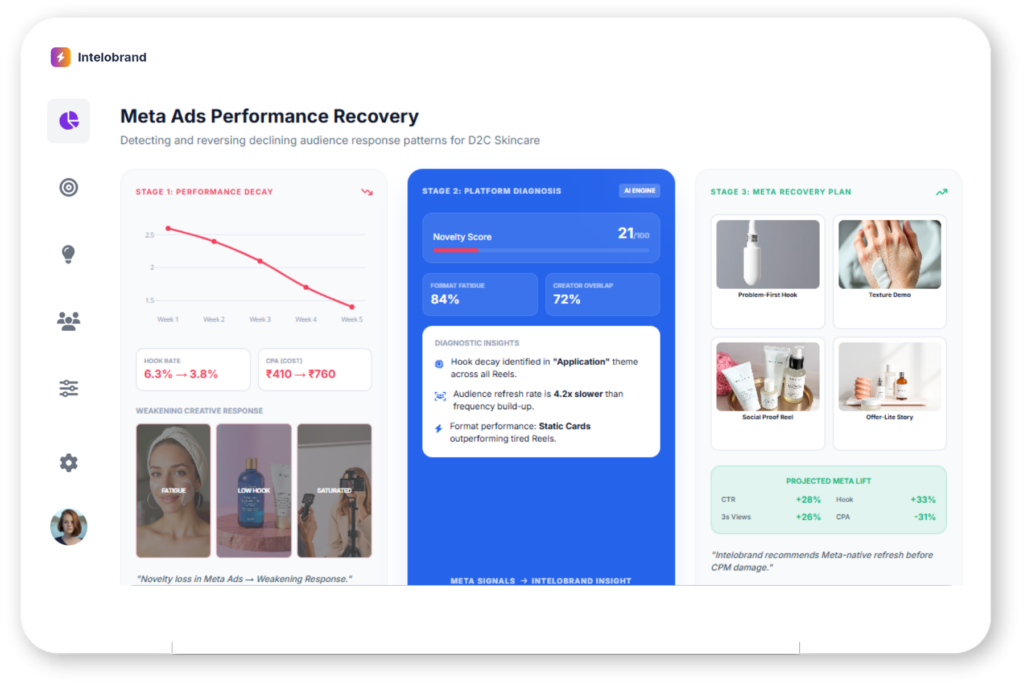
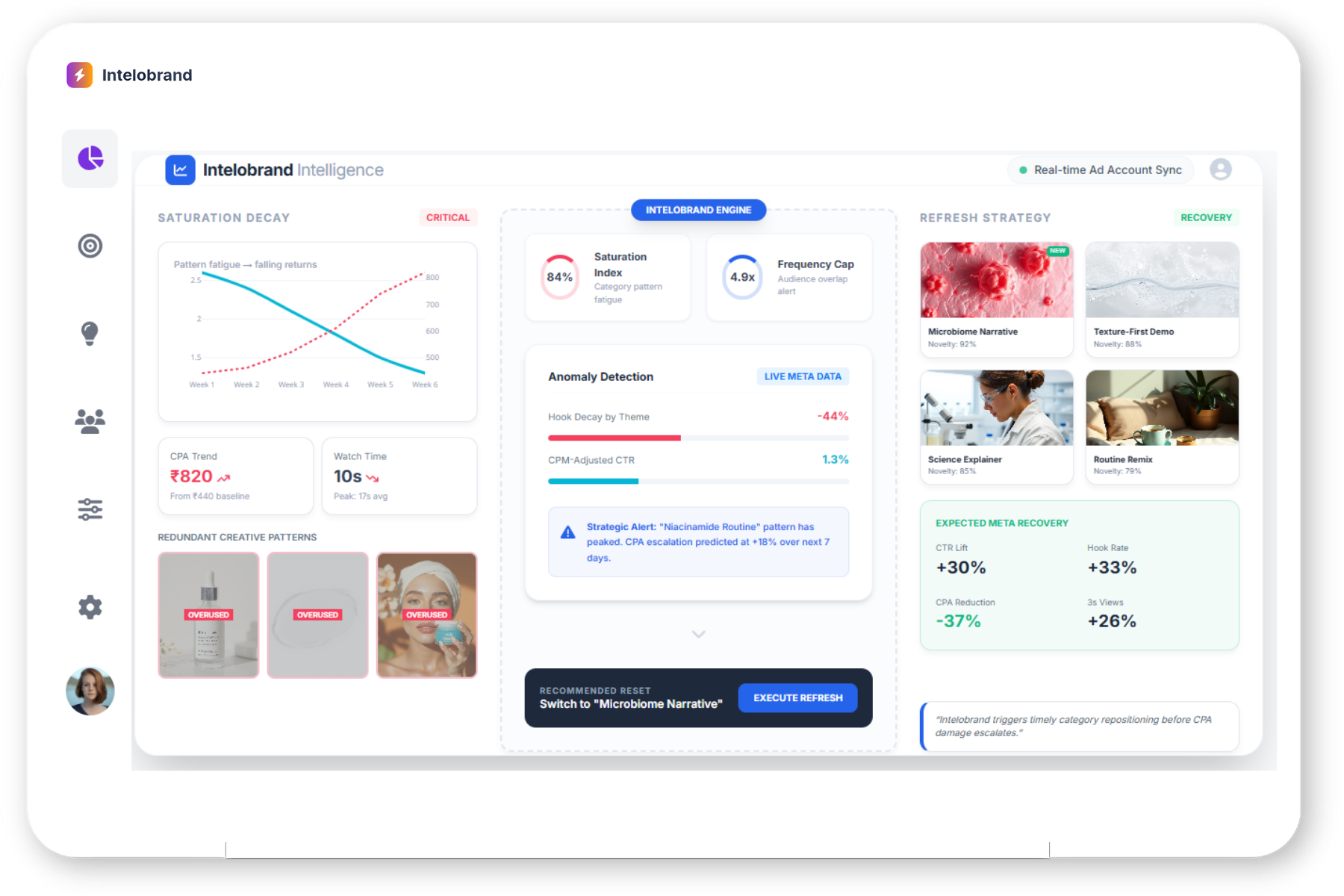
Category Intelligence highlights saturation by tracking how frequently narratives, formats, and offers repeat across brands—helping teams avoid copying late-stage category ideas that remain visible but continue declining in true performance impact.
Overused Category Claims
Common category claims are repeated excessively across competing brands, gradually reducing audience attention and diminishing overall message effectiveness.
Repeating Creative Structures
Similar creative structures appear repeatedly across competitor campaigns, making differentiation increasingly difficult for individual brands to maintain.
Declining Response Patterns
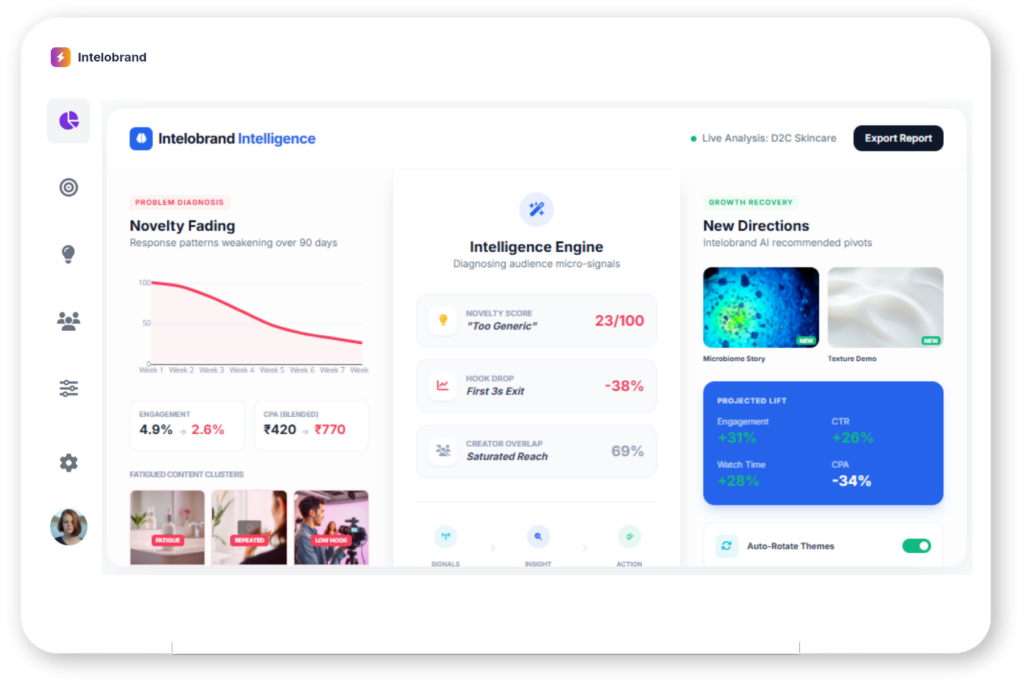
Audience response patterns weaken as category ideas lose novelty, resulting in lower engagement and decreasing campaign effectiveness.
Late-Stage Category Ideas
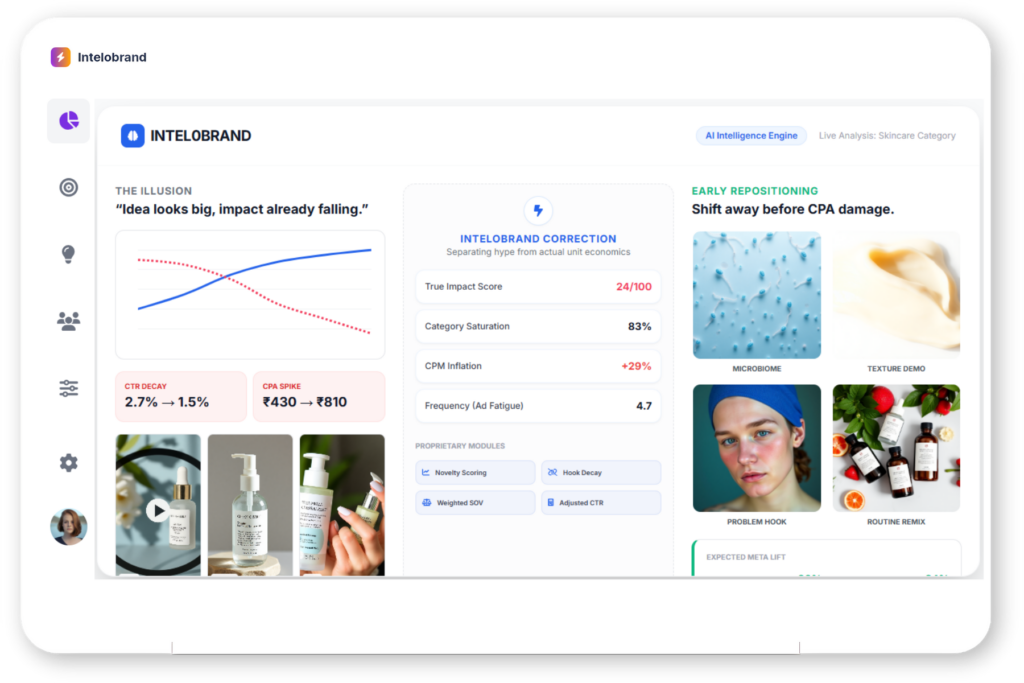
Late-stage category ideas often appear popular while actual performance impact has already begun declining significantly.
Detect early category shifts and messaging opportunities before they become crowded
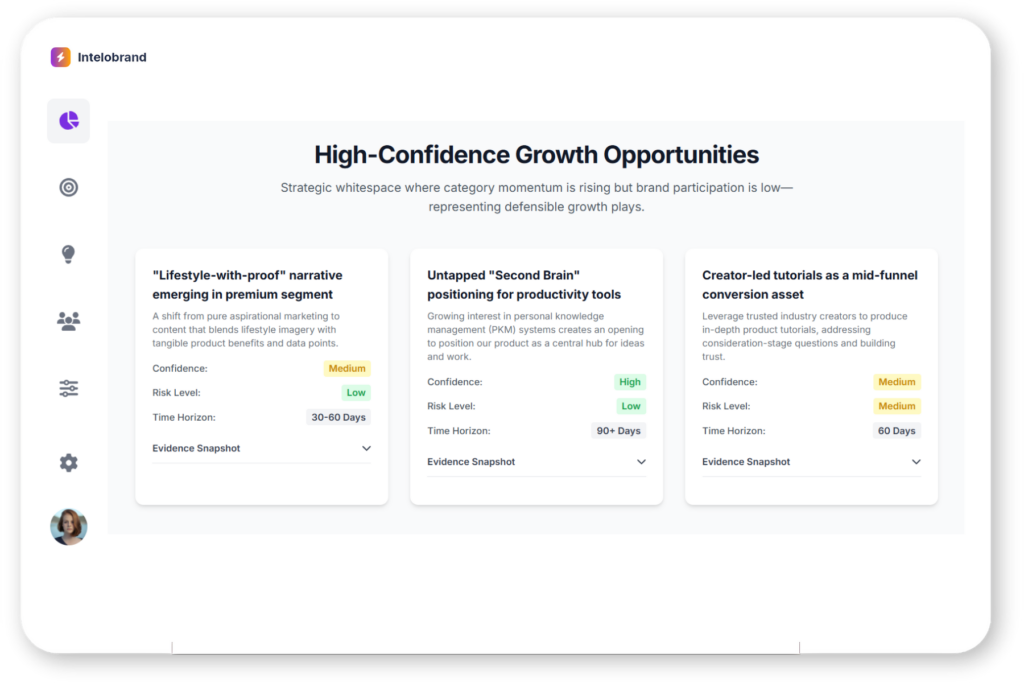
Category Intelligence surfaces early signals of change—new narratives, creative approaches, offers, and pricing moves gaining traction—helping teams enter emerging spaces before competitors scale and saturate opportunities.
Emerging Category Themes
New narrative themes gaining traction across category.
New Creative Approaches
Novel creative techniques appearing within category executions.
Underused Value Propositions
Promising value propositions competitors have not fully claimed.
Early Growth Signals
Rising engagement and adoption signals across category.
Validate category trends using performance data, not just visibility or constant repetition alone
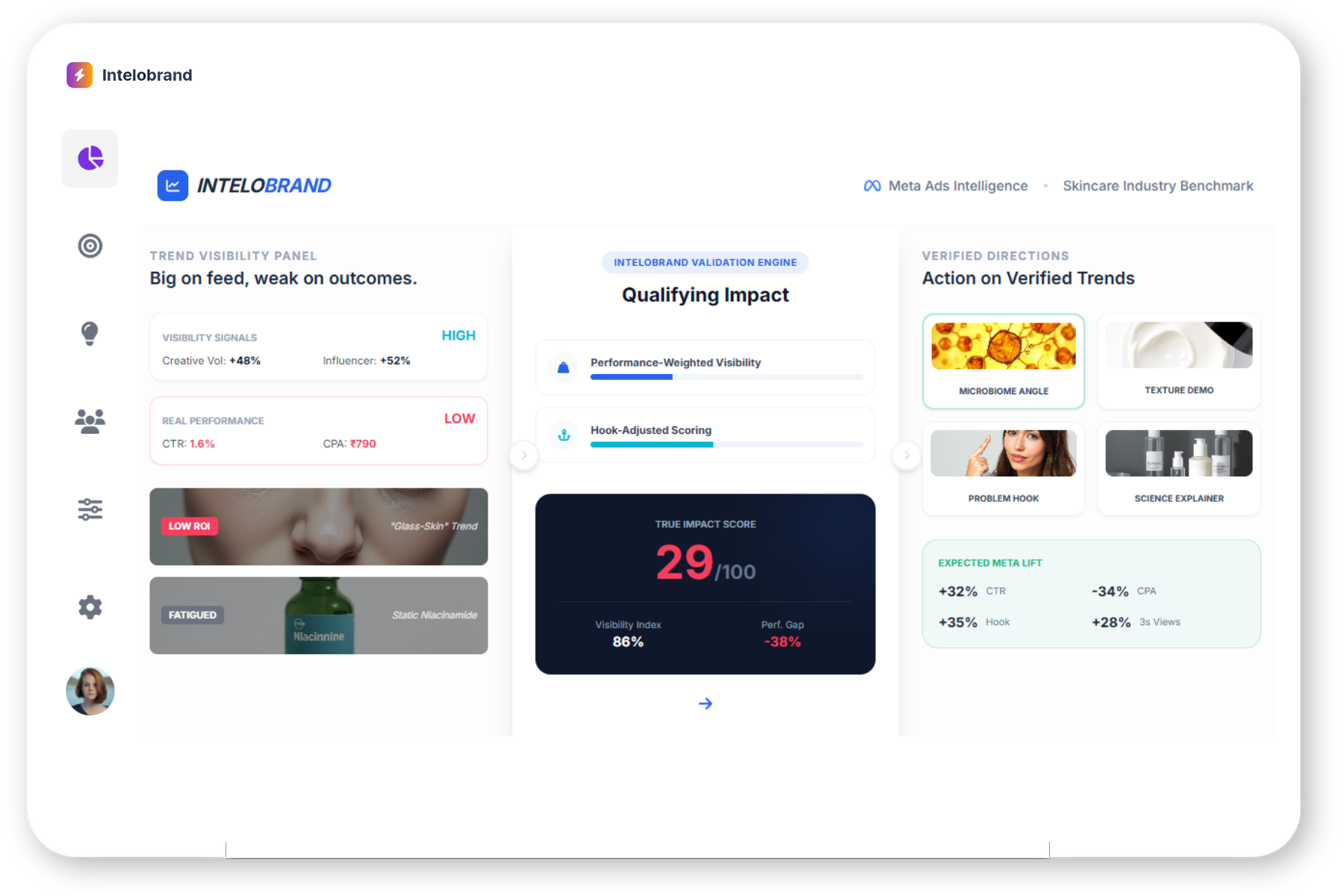
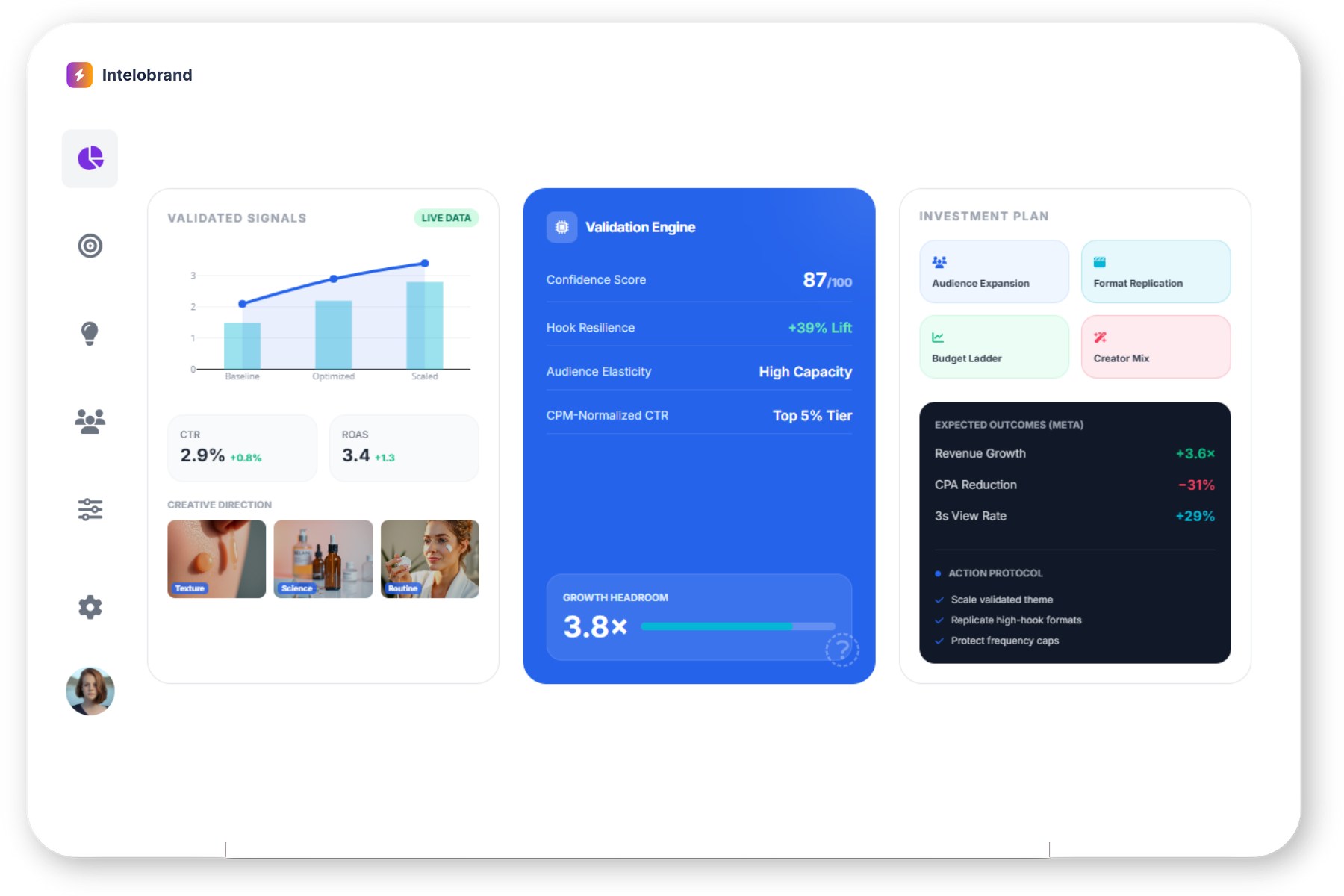
Category Intelligence connects category-level narratives, formats, offers, and pricing signals with performance data—allowing teams to distinguish between highly visible trends and those consistently delivering measurable business results across brands and time.
High-Visibility Trends
Highly visible trends frequently generate attention without delivering meaningful performance outcomes that support long-term business growth objectives.
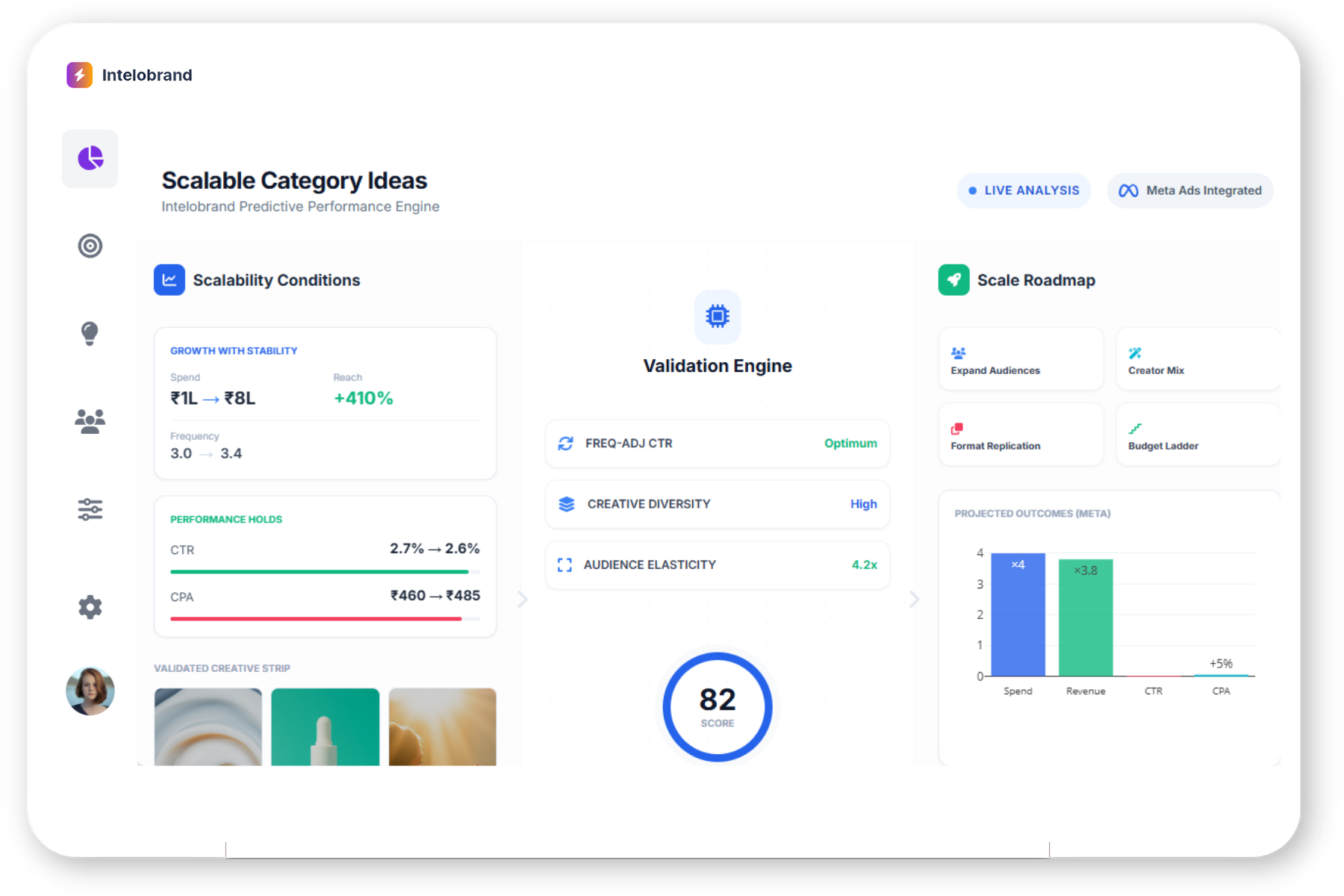
Scalable Category Ideas
Scalable category ideas consistently support efficient growth by delivering reliable performance outcomes across brands, channels, and market conditions.
Declining Saturation Patterns
Overused category patterns show declining effectiveness over time, signaling urgent need for strategic refresh and category repositioning efforts.
Performance-Backed Opportunities
Opportunities validated through performance data enable teams to invest confidently in category strategies proven to generate sustained business results.
Turn category understanding into stronger positioning, planning, and execution decisions
Teams use Category Intelligence to guide positioning, refine messaging, choose creative directions, and time market entry—ensuring decisions align with real category behavior rather than assumptions or outdated research.